
0
Sale!
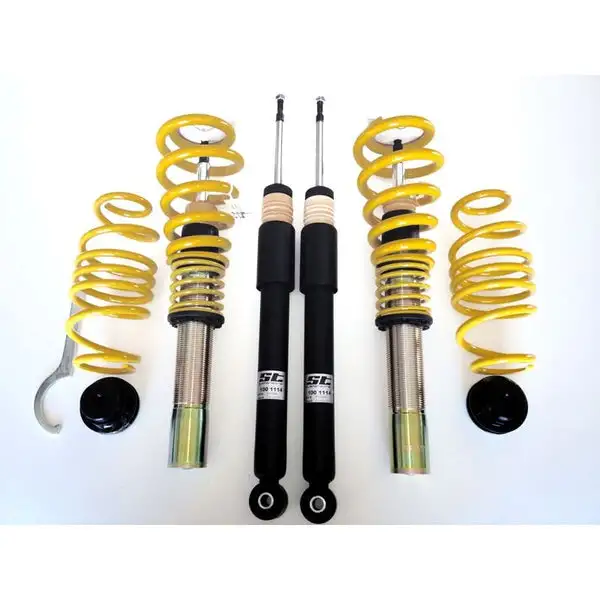
ST Suspension X Coilover Kit (132800DV)
Original price was: $1,199.00.$199.99Current price is: $199.99.
Description
Need to get low? ST coilovers feature a continuous thread construction for height adjustment from moderate to eXtreme! Each coilover is manufactured by KW automotive’s expertise and capabilities ensures maximum quality and fantastic driving dynamics.
Once installed, the ST X coilover can easily be adjusted using a polyamide ring on the galvanized, multiple-sealed strut. Adjustment is different for each car, but typically you can expect between 35 and 65mm of lowering on both the front and rear axles. For lowered cars as standard (such as the BMW E9x 3-series) the ST X coilover features a range of 30 to 60mm (front axle) and 25-55mm (rear axle).
Improved driving dynamics and handling- Designed in conjunction with KW Germany, ST X coilovers deliver a sporty handling by reducing the car’s bodyroll during compression as well as improving agility when driving fast. The high quality production of each ST X coilover includes a low-friction and pressure resistant housing alongside a chrome-plated piston rod for maximum longevity. A mono block guide and ST seal package ensures the twin-tube dampers remain free of dirt particles in all weather conditions.
Lowering with Style: the ST X coilovers
- Individual lowering within the TUV-tested adjustment range
- Front and rear axle thread adjustment (when possible)
- Galvanized coilover struts with additional coating for optimized corrosion protection
- Complete solution with adjustable spring plate, race spring system and bumpers with dust protection
- Powerful twin-tube dampers with high-quality components for maximum longevity
ADVANTAGES OF A ST COILOVER SPRING STRUT:
- ST Suspensions – Spring Strut Construction
- Excellent all around performance, provides a balance between performance and comfort for everyday use
- High-quality components for long durability
- Use of twin-tube technology, independent reactions from damping inputs minimized chassis vibrations and increase driving dynamics
- Coilovers come with all necessary components, vehicle-specific certificate and insallation instructions
Functional principle of twin tube shock absorbers
With a Twin-Tube shock absorber, the piston works inside of an inner Tube. The space between the inner tube and the casing is used as an equalization chamber. Changes in volume due position of the piston rod change the oil level in the equalization chamber between the outer casing and inner Tube.
Compression phase:
When the car swings downwards in the direction to the road, the piston rod is moved downwards.The oil displaced by the piston rod is pressed into the equalization chamber between the Tubes via specially designed orifices in the compression valve at the lower end of the inner Tube. The resistance that is created through this valve creates the actual compression forces. Oil underneath the piston also flows upwards through the piston check valve with low resistance which also influences the damper characteristics.
Rebound phase:
When the car swings upwards, away from the road, the shock absorber is extended. The piston rod is extending outward from the housing. The rebound phase valve at the lower Tube resists the oil that flows downwards through the holes in the space above the Tube. Therefore the upward motion is slowed down. When the piston rod is pulled out of the case, its volume is balanced out by the oil that flows from the equalization chamber back into the inner tube through the compression check valve.
Functional principle of mono tube shock absorbers
With a one-piston shock absorber, the piston works directly in the damping case. Both, traction and also compression phase valve are integrated into the piston at the end of the piston rod. Depending on the velocity with which the shock absorber is compressed or extended, the forces rise. A characteristic is the separating piston that separates the oil from the gas space which is under strong pressure. The gas space balances the oil expansion with temperature differences and volume changes while the piston rod retracts. The separating piston thereby moves upwards and downwards. The gas pressure of 25-30 bar in the separating space is necessary in order to support the damping forces in direction of the pressure direction.
Compression phase:
When the car swings downwards in the direction to the road, the piston rod is moved downwards. The compression phase valve on the top of the valve resists the oil that streams upwards through holes. Therefore, the downward movement is slowed down. The separating piston is thereby lowered by the same degree as the piston retreats downwards. The gas pressure underneath the separating piston thereby prevents the oils from foaming above the piston.
Rebound phase:
When the car swings upwards, away from the road, the shock absorber is extended. Thereby, the piston rod is moving out of the damping case. The rebound phase valve at the lower piston resists the oil that flows downwards through the holes in the space above the piston. Therefore the upward motion is slowed down. The separating piston is thereby lifted upwards by the same degree as the piston extends.
Related products
-
Sale!
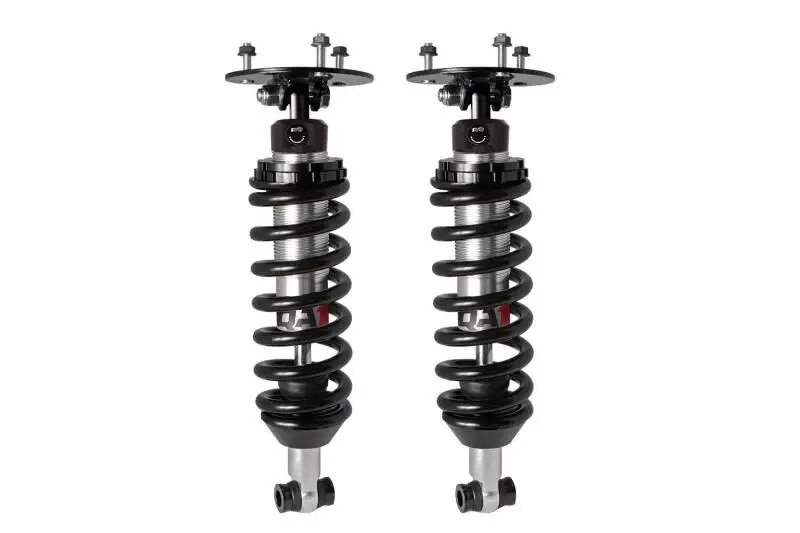
QA1 03-11 Ford Crown Victoria Pro Front Coil-Over System – Single Adj. – 9in x 450lbs/in – Aluminum
Original price was: $885.95.$199.99Current price is: $199.99. Add to cart -
Sale!
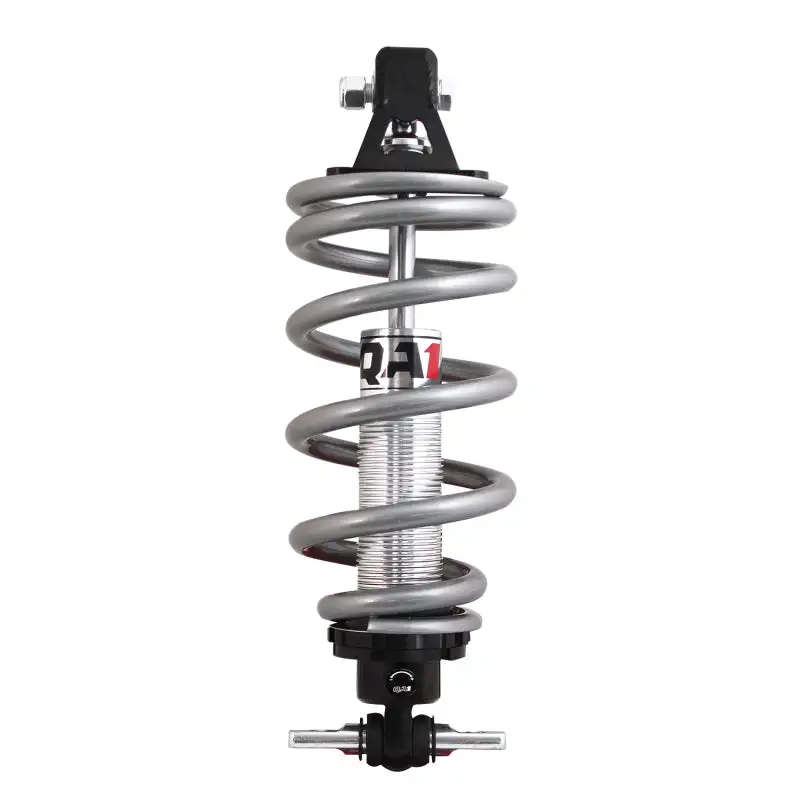
QA1 67-73 Ford Mustang Pro Front Coil-Over System – Single Adj. – 10in x 400lbs/in – Aluminum
Original price was: $854.95.$199.99Current price is: $199.99. Add to cart -
Sale!
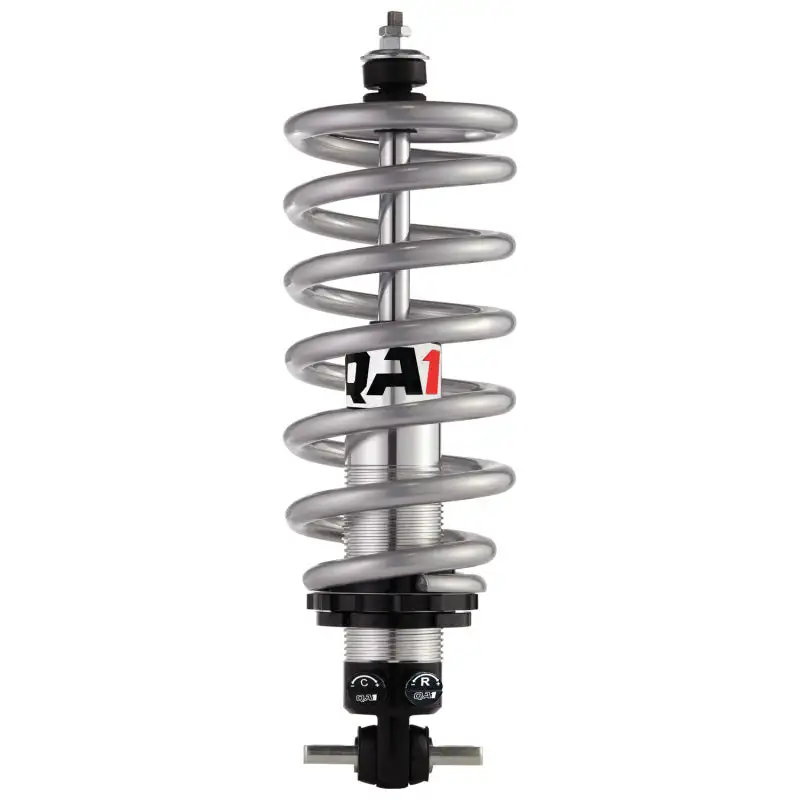
QA1 GM Pro Front Coil-Over System – Double Adj. – 10in x 450lbs/in – Pigtail – Aluminum
Original price was: $964.95.$199.99Current price is: $199.99. Add to cart -
Sale!
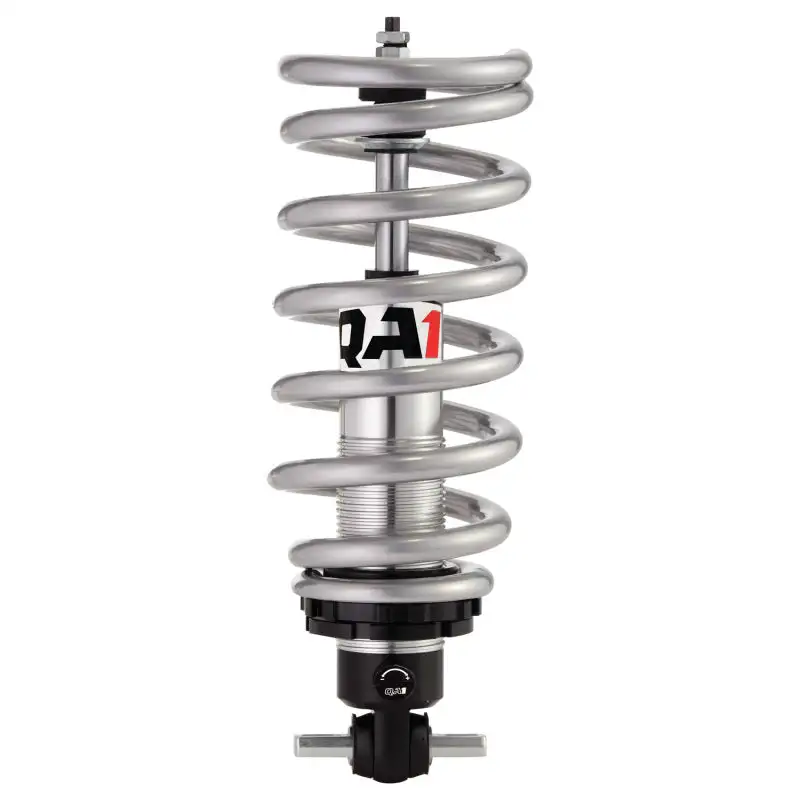
QA1 GM Pro Front Coil-Over System – Single Adj. – 10in x 550lbs/in – Flat Large – Aluminum
Original price was: $749.95.$199.99Current price is: $199.99. Add to cart