
0
Sale!
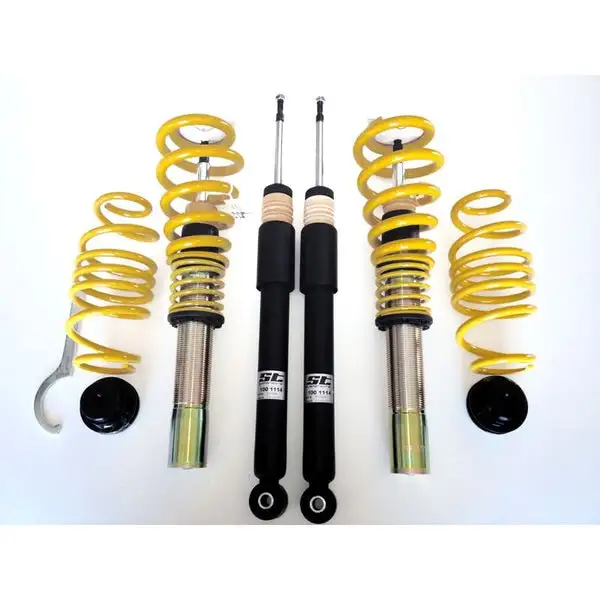
ST Suspension XA Coilover Kit (18275026)
Original price was: $1,369.00.$199.99Current price is: $199.99.
Description
The ST XA coilover kit allows you to adjust the look of your vehicle with the stepless lowering. We manufacture the adjustable spring perch from a resistant and friction-optimized polyamide composite material with stainless steel insert. Thanks to the composite material, in contrast to the anodized aluminium spring perches, possible oxidation is prevented. So you can permanently use the height adjustment of your ST XA coilovers. With our in 16 clicks adjustable rebound damping, you can further adapt the perfectly to your car pre-set damper setup to your driving profile with just a few manual steps. The adjustable rebound damping gives you the possibility to adapt the ST coilover kit either more comfortable or sportier.
The galvanized coilover struts are, as usual in the standard equipment, made of galvanized steel and our additional sealing ensures an optimized corrosion protection. We protect the inner values of your high-quality ST coilover suspension including its KW dampers with a low-friction and pressure-resistant damper housing, the use of a hard chromed piston rod and a mono block guiding- and sealing package.
Do you want to get more than just a lowering of your car? Then our ST XA coilover kit is just the right suspension for you! Thanks to the adjustable KW dampers, you can always further refine our recommended setting for your vehicle, to set your car even sportier or more comfortable. In any way, your vehicle gets a much better road holding with our ST XA coilover kit and it looks great with the continuously lowering.
Features:
- Direct Steering Behavior
- Improved Handling
- Increased Driving Comfort
- Composite Spring Perch
- Two Piece Racing Spring System
- Dust Protection andamp; Weather Resistant
ADVANTAGES OF A ST COILOVER SPRING STRUT:
- ST Suspensions – Spring Strut Construction
- Excellent all around performance, provides a balance between performance and comfort for everyday use
- High-quality components for long durability
- Use of twin-tube technology, independent reactions from damping inputs minimized chassis vibrations and increase driving dynamics
- Coilovers come with all necessary components, vehicle-specific certificate and insallation instructions
Functional principle of twin tube shock absorbers
With a Twin-Tube shock absorber, the piston works inside of an inner Tube. The space between the inner tube and the casing is used as an equalization chamber. Changes in volume due position of the piston rod change the oil level in the equalization chamber between the outer casing and inner Tube.
Compression phase:
When the car swings downwards in the direction to the road, the piston rod is moved downwards.The oil displaced by the piston rod is pressed into the equalization chamber between the Tubes via specially designed orifices in the compression valve at the lower end of the inner Tube. The resistance that is created through this valve creates the actual compression forces. Oil underneath the piston also flows upwards through the piston check valve with low resistance which also influences the damper characteristics.
Rebound phase:
When the car swings upwards, away from the road, the shock absorber is extended. The piston rod is extending outward from the housing. The rebound phase valve at the lower Tube resists the oil that flows downwards through the holes in the space above the Tube. Therefore the upward motion is slowed down. When the piston rod is pulled out of the case, its volume is balanced out by the oil that flows from the equalization chamber back into the inner tube through the compression check valve.
Functional principle of mono tube shock absorbers
With a one-piston shock absorber, the piston works directly in the damping case. Both, traction and also compression phase valve are integrated into the piston at the end of the piston rod. Depending on the velocity with which the shock absorber is compressed or extended, the forces rise. A characteristic is the separating piston that separates the oil from the gas space which is under strong pressure. The gas space balances the oil expansion with temperature differences and volume changes while the piston rod retracts. The separating piston thereby moves upwards and downwards. The gas pressure of 25-30 bar in the separating space is necessary in order to support the damping forces in direction of the pressure direction.
Compression phase:
When the car swings downwards in the direction to the road, the piston rod is moved downwards. The compression phase valve on the top of the valve resists the oil that streams upwards through holes. Therefore, the downward movement is slowed down. The separating piston is thereby lowered by the same degree as the piston retreats downwards. The gas pressure underneath the separating piston thereby prevents the oils from foaming above the piston.
Rebound phase:
When the car swings upwards, away from the road, the shock absorber is extended. Thereby, the piston rod is moving out of the damping case. The rebound phase valve at the lower piston resists the oil that flows downwards through the holes in the space above the piston. Therefore the upward motion is slowed down. The separating piston is thereby lifted upwards by the same degree as the piston extends.
Related products
-
Sale!
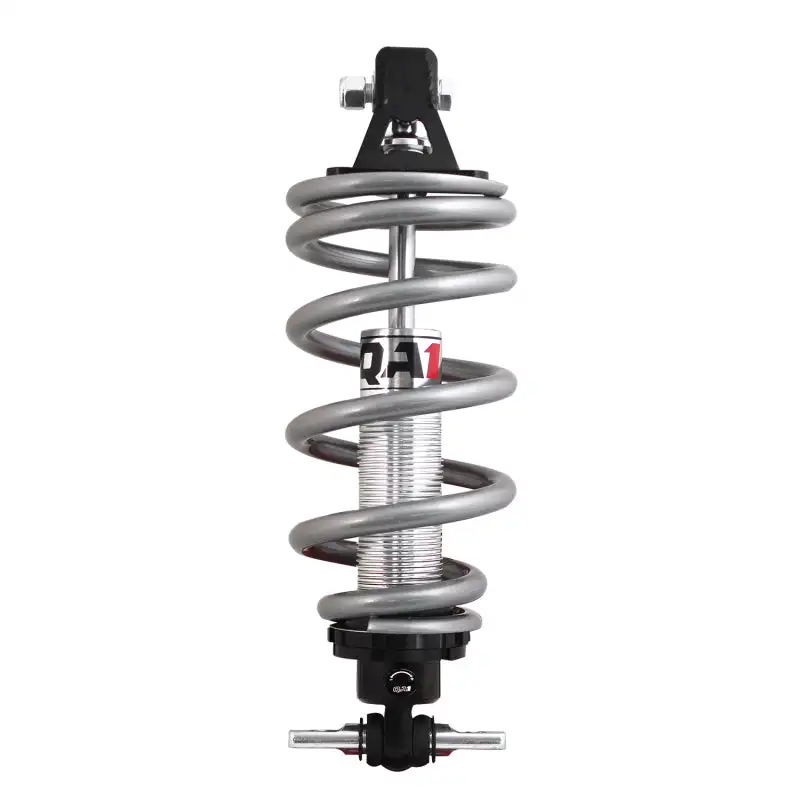
QA1 64-66 Ford Mustang Pro Front Coil-Over System – Single Adj. – 10in x 400lbs/in – Aluminum
Original price was: $854.95.$199.99Current price is: $199.99. Add to cart -
Sale!
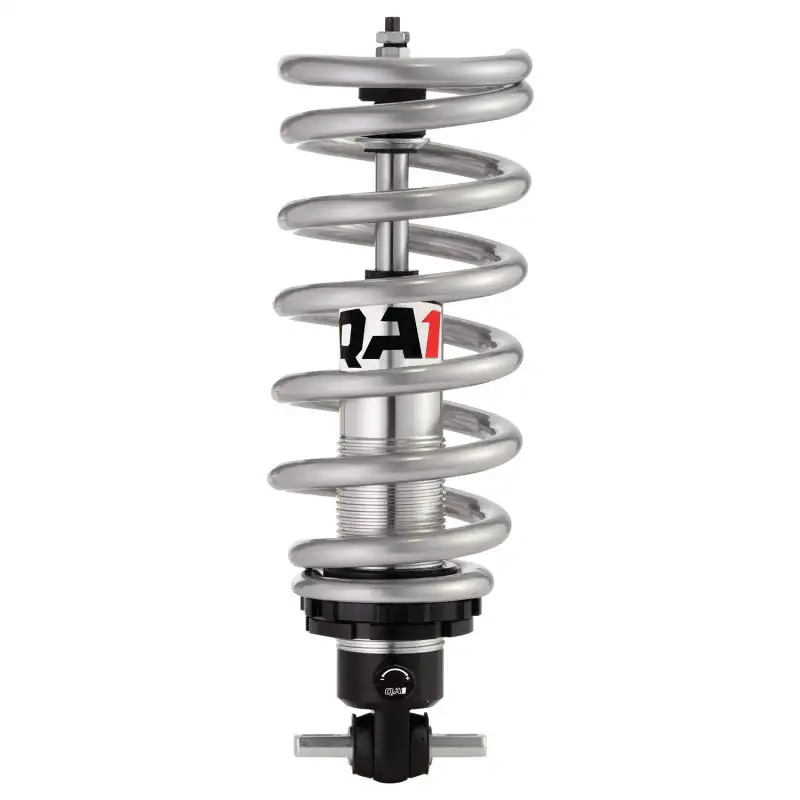
QA1 GM Pro Front Coil-Over System – Single Adj. – 10in x 400lbs/in – Pigtail – Aluminum
Original price was: $749.95.$199.99Current price is: $199.99. Add to cart -
Sale!
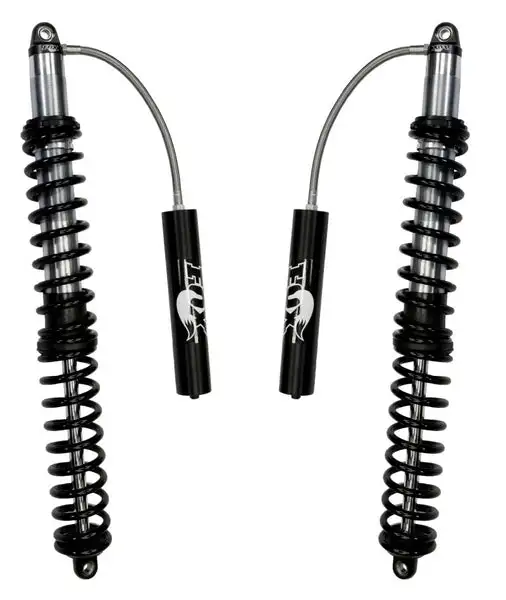
Skyjacker Coil Over Shock Absorber 2007-2017 Jeep Wrangler (JK)
Original price was: $1,401.99.$199.99Current price is: $199.99. Add to cart -
Sale!
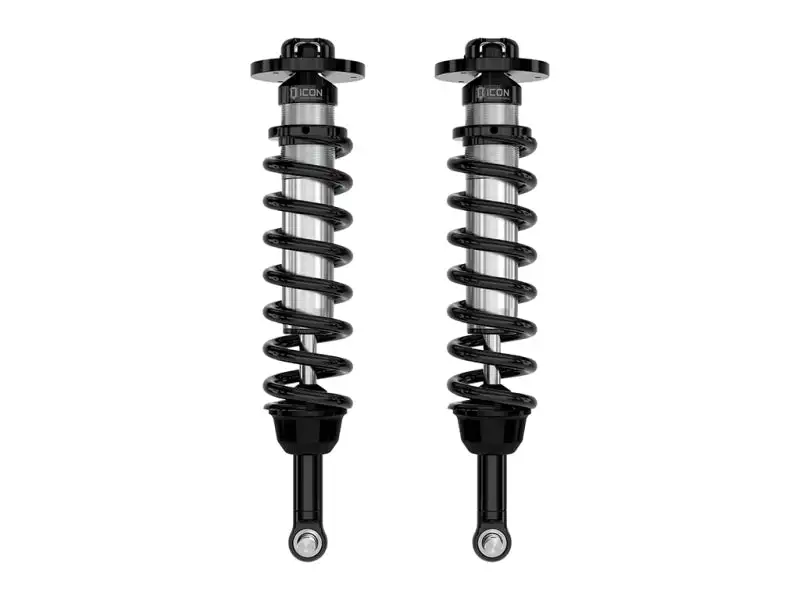
ICON 21-23 Ford F150 Tremor 2.5-3in 2.5 Series VS IR Coilover Kit
Original price was: $1,819.95.$199.99Current price is: $199.99. Add to cart